Showing posts with label Writing. Show all posts

Monday, December 17, 2018

The Lessons of Twilight or Avoidable Mistakes in Vampire Fiction


In the world of vampire fiction, there are several names that loom large.  There's Dracula.  There's Anne Rice.  There's Sookie Stackhouse.  And, of course, there's Twilight. 


In writing She Dies at the End, one of my goals was for it to be the anti-Twilight.  Now, don't get me wrong.  I read all the Twilight books.  They are page turners.  There's no denying that they're fun.  But there are some things about them that really bother me. 

First, I shall complain about the romance.  Edward emotionally abuses Bella.  He's incredibly controlling, and her worship of him is disturbing.  Her total nervous breakdown after he leaves her paints a terrible picture to young girls of what it means love someone and of how you process your feelings after it goes bad.  This is one reason that November goes through a failed romance in Book 1 of my series.  I wanted to show that a girl can be sad about a first love gone wrong but still stand up for herself and move on.  I also wanted to acknowledge the fundamental creep factor of an ancient vampire going after a teenage girl.  The power dynamics of that are really unacceptable, no matter how much you try to gloss it over by saying that he's a virgin or that she's his one true love.  

The vampire-human romantic situations in my book are portrayed as sketchy because they are, in fact, sketchy.

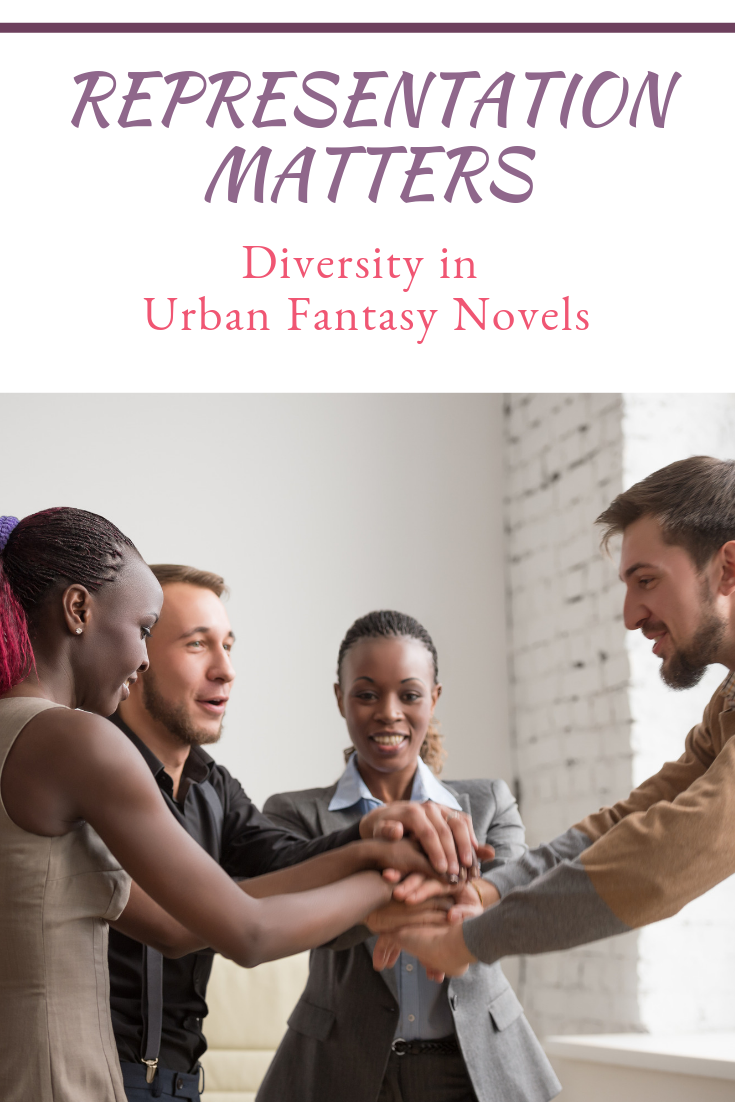
Another thing that irritates me about Twilight is the lack of diversity in the main cast.  You do have Native American werewolves, but otherwise, it's white people as far as the eye can see.  The only Black dude has a handful of pages and then dies.  Why are all the Cullens white?  There is no reason for that.  Representation matters.  When the default race for every character is white, that sends a strong, negative message to people of color, especially young people.  I deliberately create my characters to reflect the diversity of the world around me, here in the San Francisco Bay Area.  I think that makes my books more interesting and sends a positive message to all readers.

Finally, there's the total lack of any consequences for bad decisions.  In the Twilight series, Bella knows that if she becomes a vampire, she is likely to kill someone.  Her vampire friends tell her this over and over again.  Some of the Cullens even take bets on how high the body count will be.  And yet, Bella wants to become one anyway, so she can be with Edward forever and never get old.  And instead of having to face the consequences of what is fundamentally a selfish decision, she's conveniently such a special vampire snowflake that she can resist her urge for human blood with no mistakes.  I find that to be an unsatisfying cop-out, one I try to avoid in She Lights Up the Dark.  

My mixed feelings about Twilight have definitely informed my writing, and serve as an example of how helpful it can be to read within your genre.  It helps you to see the elements you love as well as those that are more problematic.  I will likely never have the level of success achieved by Stephanie Meyer, but I'm proud of the story I've created.  I think it is enjoyable, interesting, and socially conscious.  I hope you'll agree.

Read more about my vampires, fairies, and werewolves in She Dies at the End, She Lights Up the Dark, and She Marches Through Fire.

Monday, December 10, 2018

Sexism in Fantasy Novels


We all live in a sexist world, though less so than it once was.  In our fantasy novels, however, more explicit sexism is often alive and well.  This is partly due to the fact that in many fantasy novels, especially of the high or epic fantasy variety, the society portrayed is quasi-historical or what I call "medieval-ish."  There's usually an aristocracy run by men, and a religion run by men, and an expectation that a woman must marry and have children.  Even when women do seize power, they have to contend with the mysogyny of their societies.


Take Cersei from Game of Thrones for an example.  None of the men in that series, odious as they might be, would ever have to take a "walk of shame."  Or Danerys, who rose to power only after her husband's death.  Westeros is a man's world, at least until things really start to unravel.

Even conttemporary fantasy Harry Potter portrays its share of sexism.  There are only two female Death Eaters named, for example, not counting Narcissa Malfoy, who is more of a hanger-on.  In the pro-Voldemort worldview, a woman's first duty is to produce pure-blooded wizards.

Then you have the works of fantasy that, rather than portraying a sexist world as a way to criticize misogyny, instead promote a sexist message themselves.  I would put Twilight into that category, as it glorifies controling behavior by a male partner.

There are plenty of examples of sexism in my own work as well.  The world of Hexborn is not kind to its women.  My imaginary country of Bryn is a largely agrarian society dominated by a male-centered magical aristocracy.  As it was during certain times and places in our own history, women are treated as the property of their fathers or their husbands, and the only path to a relatively independent life as a scholar is by entering a religious order and forgoing marriage and motherhood. 

Especially among the nobility, many women are married off at young ages, sometimes to men old enough to be their fathers or even grandfathers, and no one seems to think much about it.  Many of the girls with magical ability, at least the marriageable ones, drop out of school early lest they become too powerful or educated, and thus too threatening, to prospective husbands.  The queen’s value lies in producing a son, and woe betide her if she fails. I think you get the picture.

The sexism in this society even extends to the titular affliction.  Our main character, Shiloh, was born with a medical condition caused by the overuse of dark magic during pregnancy.  The extreme stigma around this condition is caused partly by the misogyny of the culture, which does not even consider the possibility that the mother might not be entirely to blame for this situation.

Shiloh, in some ways, steps outside the gender order.  Being hexborn makes her infertile, and her facility with fighting magic makes her too useful as a weapon to confine her to domestic duties.  This leads some to treat her, essentially, as an honorary man, as if they can’t bear to admit that she is a powerful woman.  Thus, she has to walk a fine line in order to remain “acceptable” while retaining her value to those in power.

Who are some of your favorite examples of women stepping outside of convention, either in fiction or history?  And how well do things work out for them?

Wednesday, July 11, 2018

Hexborn Playlist: Music to Read By

Hexborn is out today!  To celebrate, and to enhance your reading experience, I'm sharing with you some music to read by.


I love all kinds of music.  I'm a singer, and while I'm in the process of writing and editing a book, I often run across songs that touch me and speak to a particular aspect of the story I'm in the midst of creating.  Gradually, I accumulate a list of songs that go along with the novel in some way.

This time, the list was also influenced by the sudden death of my father last fall.  Since he died, I've been listening to a lot of blues and bluegrass, two genres he exposed me to as a child.  You'll see that this Hexborn list is heavily composed of bluegrass and alternative country with a few Blues songs and a couple of more pop tunes.  The bluegrass emphasis is appropriate to the story, since Shiloh, my main character, comes from a small mountain community.

I'll highlight just a few songs for you here.


I chose "Grinnin' in Your Face" by Son House because I adore Son House and because Shiloh, my main character, is the victim of a lot of insults and gossip.  She is bullied because she was born with a medical condition that renders her unclean in the eyes of her neighbors.  She does her best not to allow it to get to her, as advised by Son House in this tune, and she is comforted by the steadfast support of a few treasured loved ones.


"The Water" always makes me cry these days.  To me, it is a song about death and dying.  Shiloh is mourning both her father and her mentor when the book begins, and as I am mourning my own dad, it really speaks to me.


"Love is All" always brings to my mind the character of Silas Hatch, aka "the Hatchet."  He's a man who has hardened his heart in order to be able to fulfill what he sees as his duty, but there is enough of that heart left to contain some very strong loyalties and sentimental ties.

You can listen to the whole playlist on Spotify, but if you don't have Spotify, here is a list of songs and artists:


  • "Jolene" by Rhoda Vincent
  • "Dance Upon Your Grave" by The Brothers Comatose
  • "Troubles" by Anne and Elizabeth
  • "Heaven's Gate" by Dawn Landes & Piers Faccini
  • "Twitch and Tug" by Hugo
  • "Once Was Lost" by Old Bear Mountain
  • "Sing to the Mountain" by Elephant Revival
  • "Make Me a Pallet on Your Floor" by Mississippi John Hurt
  • "Blue Ridge Mountain" by Hurray for the Riff Raff
  • "The Body Electric" by Hooray for the Ridd Raff
  • "Love is All" by The Tallest Man on Earth
  • "The Captain and the Hourglass" by Laura Marling
  • "Wrong Black Mare" by Brown Bird
  • "Little Sadie" by Doc Watson
  • "From Finner" by Of Monsters and Men
  • "Hit 'Em Up Style" by Carolina Chocolate Drops
  • "The Water" by Johnny Flynn & Laura Marling
  • "Spirits" by The Strumbellas
  • "The River Song" by Old Bear Mountain
  • "Grinnin' in Your Face" by Son House
  • "Tusk" by Fleetwood Mac
  • "Seven Nation Army" by The White Stripes
  • "Can't Catch Me" by Avicii
I hope you enjoy listening as you read!  Grab your copy today, in either ebook or paperback.

Monday, February 26, 2018

Before and After: Grief and the Act of Writing


I’ve written a lot of characters with dead parents. I think many of us do. We have to get them out of the way, after all, so we can expose their kids to mortal peril. I thought I could imagine my characters’ pain fairly well. I’m an empathetic person. I consume a lot of media that explores grief. As it turns out, I didn’t really have a clue.


My father died of a sudden heart attack in October, 2017, at the end of a family vacation. I had just seen him that morning, then had headed to the airport to come back to California. When I landed, I found out in the baggage claim that he had died while I was in the air, barely an hour after I had taken off. He’d collapsed at the hotel, just before my parents were supposed to leave for the airport themselves.

A few months later, when the shock finally wore off enough for me to start working again, I realized that I should probably rework a few scenes in Hexborn in which Shiloh, my main character, talks about the death of her father. Such grief was no longer theoretical to me.

Take a look at this scene from Hexborn and compare the “before loss” version to the “after loss” version. To me, the second one feels more true. Of course, I’d much rather not be in a position to know that.

***

Before:

Shiloh knelt next to Esta in front of the shrine to the Mother in the Temple. She was utterly alone, no ladies-in-waiting to accompany her in her sorrow. Her nose and cheeks glowed bright red from crying, but her eyes were now dry.

“I thought I might find you here,” Shiloh said softly. “I am so sorry for your grief.”

Esta looked at her in surprise. “No one else is,” she declared, her bitterness escaping like steam from a kettle.

“I know. Her death makes things easier for everyone else, and no one will show any regret over her passing for fear of being thought a traitor. But I know what it is to lose a parent, and I am sorry you have to carry this alone, my lady.”

“They poisoned her. I feel it in my bones. The queen’s people, or Hatch’s minions. Only the Gods know who. No one will ever admit it, nor will anyone ever face justice for the act, at least not in this life. I will never be able to speak of it to anyone who matters, not so long as that woman is queen. But I will not forget. I will never forget,” Esta swore.

“When my father was murdered, I lashed out at those who had taken him from me. But it didn’t make me feel any better. It made me feel worse. The only thing that helped at all was time. And prayer.” Shiloh glanced around. “I need to get back before I am missed. I’ll pray for you, my lady.” She rose to leave.

“My priests tell me you are in here twice a day,” Esta told her, halting her departure. “That you are a faithful woman.”

“Yes, my lady, I try to be,” Shiloh confirmed. “I was raised that way.”

Esta nodded. “So was I. But it is no longer in fashion.” She turned her attention back to her prayer beads, and Shiloh took that as a dismissal.


After:

Shiloh knelt next to Esta in front of the shrine to the Mother in the Temple. The king’s daughter was utterly alone, no ladies-in-waiting to accompany her in her sorrow. Her nose and cheeks glowed bright red from crying, but her eyes were now dry.

“I thought I might find you here,” Shiloh said softly. “I am so sorry for your grief.”

Esta looked at her in surprise. “No one else is,” she declared, her bitterness escaping like steam from a kettle.

“I know. Her death makes things easier for everyone else, and no one will show any regret over her passing for fear of being thought a traitor. But I know what it is to lose a parent, and I am sorry you have to carry this alone, my lady.”

“They poisoned her. I feel it in my bones. The queen’s people, or Hatch’s minions. Only the Gods know who. No one will ever admit it, nor will anyone ever face justice for the act, at least not in this life. I will never be able to speak of it to anyone who matters, not so long as that woman is queen. But I will not forget. I will never forget,” Esta swore.

“When my father was murdered, I lashed out at those who had taken him from me. But it didn’t make me feel any better. It made me feel worse,” Shiloh sighed. “I’m not going to lie and tell you that the pain of missing them goes away. You just get used to it, and it dulls to an ache. It’s as though the Gods didn’t make us to suffer entirely without respite. It does help to talk about them.”

Esta snorted. “With whom? I trust no one, not even my confessor.”

“Even if only to the Gods, then,” Shiloh suggested gently. “Everyone says that time helps. And it does, in a way. But I resent it passing. It’s like a river that carries me further and further away from my Da. And to me, it’s like it just happened, but the water just keeps on flowing,” Shiloh concluded, then glanced over her shoulder toward the door. “I need to get back before I am missed. I’ll pray for you, my lady.” She rose to leave.

“My priests tell me you are in here twice a day,” Esta told her, halting her departure. “They say that you are a faithful woman, Unclean or not.”

“Yes, my lady, I try to be,” Shiloh confirmed. “I was raised that way.”

Esta nodded. “So was I. But it is no longer in fashion.” She turned her attention back to her prayer beads, and Shiloh took that as a dismissal.

***

They say that art is therapeutic, and I think that is true. What pain have you poured into your own art? What art has touched you in your damaged places?

You can read more about Shiloh and her trials and tribulations by downloading a sample here. Happy reading!


Sunday, March 27, 2016

Vampires? In my Livermore?

Several chapters of my new novel, She Lights Up the Dark (November Snow Book 2), are set in lovely Livermore, California, where I happen to reside.

I enjoy setting my paranormal adventures in local places for a number of reasons.  For one thing, when writing, it is much easier to use locations with which you are familiar.  The references come across much more naturally than when you're using street names or locations you dug up on the internet.  I also love the incongruity of writing a story in which vampires are running around doing crazy things in locations I see and visit on a daily or weekly basis.  I feel as though I know a secret every time I walk into Espresso Rosetta or take my kid to Les Knott Park.

And then there's the fact that Livermore is an awesome little city, and I feel it deserves to be more well-known than it is.  We have beautiful landscapes, parks, and open spaces.  We have science and ranching, industry and vineyards, arts and sports, all in one town.  We have a welcoming population that is ever-increasing its diversity.  It's a pretty great place-- way more interesting than Forks. ;-)

If you ever have the good fortune to be in my adopted hometown, see if you can track down the locations you'll be reading about in She Lights Up the Dark, and post the photos on my Facebook page.  Speaking of which, have you pre-ordered your copy yet?  Tick-tock: April 19 will be here before you know it!

Sunday, October 4, 2015

New Adult Novels and How I Wrote One By Accident


Okay, true confessions time: I kind of wrote a “new adult” novel by accident and realized it after the fact. An emerging genre, new adult novels typically feature a protagonist between the ages of 18 and 25. Often they are going off to college or starting their career. The main character is dealing with many of the coming of age issues common in young adult literature but in a more adult fashion. The facing of first loves, insecurities, new friends, and new challenges might be similar, but with fewer of the constraints of a high school student's life. Some people consider new adult to be young adult lit with more sex and language, which is, I think, a bit of an oversimplification.

So, how did I wind up with a new adult novel?

I was writing a novel with vampires, so I wanted my female protagonist to be at least 18. Why? For one thing, a centuries old dude hitting on 16 year old girl is gross; I don't care if he's a virgin (cough, Edward Cullen, cough). The girl being eighteen isn't a whole lot better, but that is where we draw the line of adulthood at the moment. So, yeah, I'm anti-statutory rape. I guess that makes me "Team Jacob."

I also think eighteen is an interesting age. You are technically free from parental control but you haven't really learned how to be an adult. You have the promise of new adventure and independence, with a healthy side of fear and crippling inexperience. And I think inside of everyone there is a part of us that is always 18. When we start doing something truly new to us (like, maybe, writing our first novel . . .), we recapture a bit of that feeling of exhilarated uncertainty. I think that is part of why we all enjoy coming of age stories so much.

A lot of our favorite pieces of pop culture could easily fall into this "new adult" category. Star Wars is largely about Luke's journey to adulthood and Jedihood. I guess Degobah isn't exactly college, but close enough. The Star Trek reboot features officers just out of school. Agents of Shield focuses on Skye/Daisy, a girl in her early twenties trying to figure out who she is and what she is meant to do with her life and her emerging power. How to Get away with Murder is peopled by a bunch of law school students. And that is just off the top of my head.

Of course, works of fiction tend to fall into several categories at once. She Dies at the End is also a paranormal fantasy and a vampire story, occasionally even romantic. But, overall, it's about November coming to terms with her gifts and her own agency in her life, which is something we all go through, even without vampires and fairies and werewolves along for the ride.

This time in our lives, the period of early adulthood, obviously retains an emotional pull. I guess its gravity pulled me in, and a new adult novel is where I wound up. Now I’ll just pretend I did it on purpose. Shh! Don’t tell anybody.

Wednesday, September 23, 2015

What makes a fun villain

Everyone loves a good bad guy. So what makes a perfect villain we love to hate?  For a deliciously evil villain, I think you need at least three of the following:

Unconventional attractiveness


We like our villains handsome but in a weird way.  They can't be too ugly, or too pretty.  The face has to have something a little off about it: too sharp a nose, too prominent cheekbones, a cruel mouth. There has to be something that gives you pause.

Examples: Ricardo Montalban in Wrath of Khan, Benedict Cumberbatch in Wrath of Khan

Charisma


If the villain has no charisma, why would we want to watch her or read about her?  What would draw your attention or the loyalty of the bad guy's minions?

Examples: Glenn Close in Damages, Meryl Streep whenever she's a villain

Style


There's something about an antagonist who knows how to dress.  He doesn't necessarily have to follow convention or even good taste, but it's nice when a villain has a look all his own.

Example: Walton Goggins' Boyd Crowder on Justified

Sad back story


A villain is the hero of his own story, after all.  The sad back story helps motivate his actions and gain audience sympathy even when he is doing monstrous things.

Examples: Magneto,  Loki

The voice


If the villain has a voice you'd listen to reading a grocery list, you're halfway there.

Examples: Alan Rickman, Benedict Cumberbatch, James Spader


Nihilism


We love villains who just don't give a good goddamn, who just want to see the world burn.


Example: Heath Ledger’s Joker

What do you think makes a satisfying book or movie villain?

Thursday, September 3, 2015

Representation matters

My first book, She Dies at the End, has more diverse characters than many paranormal or urban fantasy novels out there. So why did a white woman write a book full of people of color?

People of color are bombarded daily with the message from popular culture that white is normal and that everything and everyone else are not. That sends a harmful message to everyone, of any race. I didn't want my book to be part of that damaging narrative, so I have tried to create characters in which a variety if people can see themselves reflected.

If we're going for realism (well, realism in a world where vampires, fairies, and werewolves are real, anyway), my characters in She Dies at the End would not be living in an all-white world. My story is set largely in the San Francisco Bay Area. California is not majority white. Why would a story set here have only white people in it? Why would a vampire family assembled over many centuries across four continents consist solely of Europeans?

Then there is the fact that it is boring to live in a monochrome world, so why should people have to read about one? When I started my book, I was writing for fun. I made choices that made me happy. I wanted white, Black, Asian, Latino, and mixed characters. I wanted a cast of characters that made me think of Oakland in all its mixed up glory, that celebrated the city where I once taught high school and where I still go to church.

My son is half Black, half East Indian. He has an Indian dad and a white mom. Kids like him should see people they can identify with in pop culture. White kids also benefit from seeing people of color portrayed in a positive light. It combats all the negative stereotypes they see broadcast every day. It helps us all have empathy for people who look different from the way we look.

And don't tell me that talking about race makes me the real racist. That is bullshit. Ignoring race means ignoring part of who someone is and dismissing the lived experiences of people of color.

Did I do a perfect job realistically portraying my characters of color? Probably not. I did my best to use everything I have learned by listening to my friends and family of color, or by listening to strangers' stories online and off. I may well have made a hash of it, but at least I tried. That's more than a lot of much more successful authors can say.

Representation matters.

Monday, August 17, 2015

Tales from the sick bed

Over the last several years, writing has become an important and rewarding outlet for me.  It has taken an especially important place in my life due to the fact that for the last 15 years, I have been living with and trying to effectively manage a chronic illness.  I'd like to share some of the ways writing has enriched my life and helped me to compensate for some of the losses and limitations I experience, in the hopes that I might encourage some of my fellow members of the constantly sick club to take up the metaphorical pen.

Creative and intellectual fulfillment


I have a degree in chemistry.  I was a straight-A student.  Lupus makes it impossible for me to work a full time job without becoming dangerously and constantly ill. Many people with chronic conditions are in the same boat, and it can deal a terrible blow to one's self-esteem.  Writing, whether for publication or simply for oneself, can provide a sense of accomplishment that can make the difference between contentment and despair.  Sharing your writing can make an impact on the world around you and provide you with a new sense of purpose.  Even if you only reach a few people, those few people have richer, happier lives because of you and your work.  Moreover, many of us experience the "brain fog" common to the chronically ill.  Mental deterioration is especially common if your disease is neurological in nature.  Writing or other creative outlets can help keep the brain firing on all cylinders.

Flexible hours and work environment


Writers don't have a fixed schedule.  The work can be done any time of day and in almost any location.  You can write in bed.  You can do research in your doctor's waiting room.  You can brainstorm with an IV needle in one arm and a blood pressure cuff on the other.  You can set your own realistic deadlines, keeping in mind your strengths and your limitations.  Chronically ill people hate the perception that we are unreliable because we often have to cancel plans or make adjustments to schedules in order to manage our symptoms.  At least with writing, or other artistic pursuits, we don't have to worry so much about letting anyone down or pushing ourselves so hard that we pay for it later.

Escaping the house with your imagination


Being sick all the time can be incredibly boring.  Being stuck at home can be depressing.  Limitations posed by your condition can be infuriating.  But your characters can do everything you wish you could do and go anywhere you dream of going.  I will never be able to sunbathe on a beach, and I'm unlikely to run a marathon, but my mind has no such limitations.  Daydreaming is fun and stress reducing, and as a writer, you get to call it work.  

Easing loneliness


Isolation can be one of the most damaging aspects of chronic ailments.  Sharing your writing with your friends and family, or with the online world at large, can help you make connections.  The internet makes it easier to find people with whom you can share your thoughts as well as your art.  You don't have to write a novel.  You can share a poem or a short story.  You can blog about your favorite show, or book, or sports team, or hobby. You can write about the political or social issues of the day and discuss your views with the like-minded and not so like-minded.  It can be terrifying to put your work out into the world, just as it is scary to go to a party with a bunch of people you don't yet know.  I try to tell myself that nothing worth having comes without risk.


Trying to practice what I preach, my new adult paranormal fantasy novel She Dies at the End is now available fon Amazon Kindle.

Friday, July 24, 2015

The rosary and the ties that bind, or religious imagery in vampire fiction

There is some religion in my first book. I hope it isn't an obnoxious amount. Because the main character spends the whole story facing the issue of her own mortality (spoiler alert?), it seemed only natural to me that issues of faith and spirituality would surface from time to time. My protagonist, like most of us, wants very badly to believe that her life has a purpose and that God will protect her, even as she doubts God's existence and benevolence.

I'm a Presbyterian these days, but I grew up Roman Catholic. And not just a little bit Catholic: I went to Catholic school K through 12. I taught Sunday school and sang every week at mass. There are many aspects of Catholicism that I still miss, even though I left the Church for what I think are good reasons. My Catholic upbringing certainly still affects my spiritual outlook. One of the things I still miss and that continues to have an important influence on me and my writing is the rosary.

Protestants tend to frown on the rosary. The think it's about worshiping Mary, which it isn't, not exactly. Catholics do revere Mary as the Mother of God. We ask her to pray for us. The rosary is part of the rhythm of life when you are Catholic. When times are tough, there's a rosary in your pocket to remind you that God is with you. There is a meditative quality about praying the rosary that is largely absent in a mainstream Protestant spiritual life. The beads add to the centering quality of the ritual: the feel of them, the noise of them clacking against one another, the counting of the repeated prayers. It also fills the need many of us feel for a more feminine spiritual presence in a religion dominated by male authority and male imagery.

In my novel She Dies at the End, the main character, November, carries a rosary that belonged to her grandmother. She doesn't consider herself particularly religious, and she feels a lot of anger toward God, but she still carries it in her pocket. It is her touchstone, a tangible symbol of love and family as well as spirituality.

There is one scene in which November, in a moment of extreme desperation, uses the rosary as a weapon. It occurs to me that some of my readers might find that episode troubling or offensive, and I want to assure you that was not my intention. Rather, I meant it to be a physical manifestation of the spiritual armor many of us who are religious need in order to withstand the slings and arrows of our lives. You know, like one of those metaphor type deals. Yeah, I'm pretty deep. It's okay if I'm blowing your mind.

Moreover, the story of Mary is the ultimate example of a strong woman who accepts a heavy burden for the good of the human race, much like other heroes both fictional and historical. Then there's the motherhood aspect of the Blessed Mother: November has lost her earthly mother, but she can still turn to a spiritual mother in her moments of distress.

None of us will get into a fight to the death with a super-powered fairy in a gas station bathroom (well, I certainly hope not), but we all have moments of desperation, and when they hit, I still find myself saying a Hail Mary or clutching a rosary. It seemed fitting that November would do the same.

Read my book! She Dies at the End, available exclusively on Amazon Kindle.

Monday, July 20, 2015

Can I get that novel with soy milk?

I love to write and edit at Starbucks. I know it's a waste of money. I know I should prefer my local independent artisanal hipster fair trade coffee shop, man, but that's a fifteen minute drive and has questionable WiFi. There are few things I enjoy more than pulling out the laptop or tablet at the closest Starbucks, setting it up next to a caffeine and sugar delivery system, and getting down to work. So why do I love it so much?

1) I have a terrible sweet tooth

I love sugar. I love carbs. By a stroke of genetic luck, I'm still skinny. Of course, I also have Lupus, so maybe that wasn't really a winning ticket in the genetic lottery after all. Anyway, I try not to go too overboard (only two pumps of sweetener, please), but I do love a scone or chocolate croissant to go with my creativity. I had a green smoothie for breakfast, so it's cool, right?

2) Home is too distracting. Starbucks is just distracting enough.

Starbucks may be bustling, but there's no laundry to do there. No dishwasher to empty. No dinner to prep. No bills to pay. No garbage cans to roll to the curb. No children's torn clothes to mend. No floor to sweep. There is just me, the computer, my characters, and a bunch of strangers who won't bother me. The music and people coming and going are just the right amount of background stimulation for me.

3) My local Starbucks is the best

No, for real. Starbucks #6532 is the best one I've ever been to, and it's less than half a mile from my house. The drinks are always perfect. The people are super nice, and they are really good at their jobs. The place is always clean, including the bathrooms. The music is never too loud. The parking lot isn't too crazy. The WiFi always works. They've never poisoned my dairy allergic child. Pretty much the perfect Starbucks experience every time.

4) Seeing/Spying on my fellow humans

Being a stay-at-home mom can be isolating. So can being a writer. Thus, I find being around other adults energizing even if we're not interacting all that much. Also, people do an interesting variety of things at Starbucks: dates, job interviews, meetings, catching up with friends, snacks with the kids, etc. It's kind of fun to see what other people are up to, and it's all grist for the inspiration mill.

I suppose I will continue being a cog in the corporate machine and do a fair bit of my creating at the neighborhood Starbucks. I don't drink, smoke, or do drugs, so I guess a frappuccino and a petite vanilla scone or three isn't the end of the world.

Read my novel, She Dies at the End, available for on Amazon Kindle.

Monday, March 9, 2015

Five Life Lessons From Disneyland, In No Particular Order

We recently made our first family trip to Disneyland. It was, in the words of our five-year-old, "totally epic." I had a lot of time to mull things over while standing in line for tickets, standing in line for rides, standing in line to meet characters, standing in line to avoid standing in later lines, standing in line to eat, standing in line to pee, standing in lines for a bus to another line, etc. Here is a summary of my musings, and I won't even make you stand in line to read them.


1) Don't force your kids to do things they aren't ready for.

This applies to many areas of life, but Disneyland makes it uncomfortably obvious in the weeping, screaming faces of children mid-meltdown. There is no point in bringing a kid younger than five to Disneyland. You will pay a lot of money, and everyone will suffer. Between the skeletons freaking everywhere and the overpriced toys around every corner, you are well and truly screwed if your kid is not old enough to have some degree of control over his feelings.

This lesson applies to many areas of life. Perhaps a 3-year-old doesn't need tutoring or to be playing three sports, for example. Perhaps it's okay that my kid needs a nightlight, hasn't yet read War and Peace, and still wakes up with a wet pull-up in the morning. I'm pretty sure that by the time he leaves for college, he will possess both literacy and bladder control.

2) Churros are yummy.

Enough said.

3) A place that is fun can still be casually racist.

Tiana. Iridessa. The Black baby dolls singing "It's a Small World." There, I've listed all the Black characters I saw at Disneyland who aren't shooting poison arrows or wearing hats made of bananas -- and only the singing babies had curly hair.

Does this statement mean that I think everyone who works at Disney is a racist, and you can't go there ever again, and if you have fun there you're a terrible human being, and I don't want to be your friend anymore, and we should feel guilty for being born white? No.

Does this mean that I think white supremacy and white privilege are pervasive in our culture and I saw that in stark relief at Disneyland? Yes. Does it mean that it makes me sad that my Black/Indian kid sees very few people there who look like him? Yes. Do I think white people need to be more aware of and self-aware about these kinds of issues and be a part of fighting the good fight? Yes. 

4) Personal interaction makes a bigger impression than dazzling technology.

You know what my kid loved best at Disneyland? It wasn't the amazing rides, though Buzz Lightyear Astro Blasters was a big hit. It was meeting and conversing with Captain America and getting to fight Darth Vader in the Jedi Training Academy. He loved interacting with the characters and staff and playing pretend with the other kids on Pirate Island and in Toon Town. He loved telling his tales of adventure to anyone in earshot back at the hotel. He loved spending time with his parents and his birthmother and sharing his excitement with us. The joy was in the interaction and the relationships.

Kids don't need an expensive trip or pricey gadgets to make happy memories. They just need us and an adventure of their own making.

5) Good things come to those who wait.

We did a lot of waiting in line, as I may have mentioned earlier. My kiddo was a trooper. After every ride, I asked him if the wait was worth it. Every time, he said that it was. We never knew for sure while we were doing the waiting of course. We had our moments of doubt. Maybe Nemo will stay lost, we thought. Maybe all the animatronic children singing "It's a Small World" will come to life and kill us all in their first step to world domination. Maybe I'll barf on Star Tours. Okay, that last one is a bad example since it almost actually happened. The point is that in the end, generally, our perseverance was rewarded.

Good things come after a time of waiting. Good things can even come during a time of waiting.

This is a lesson we hear often in the church: look at Advent and Lent. But sometimes in our daily lives, we want everything to come so quickly.

This is a lesson I often struggle to remember as we wait (over 2 years so far this time around) to see if anyone out there will choose us to raise her child. It is a lesson I have to repeat to myself as I struggle to make progress writing my stories and getting them published in my very limited free time. It is a lesson I often forget when I get impatient with my health, when Lupus seems to be winning and my treatments seem to struggle to make any headway.

When I get impatient, I need to remember that when I look back at periods of my life spent waiting, those aren't bad memories. The journey still contained joy and growth and fun. I also need to remember that every time I've been seemingly stuck in an endless line, that every time the days have crawled by with little to show for them, when I got to the front of the line, the ride was still worth it: better, even, than Astro Blasters.